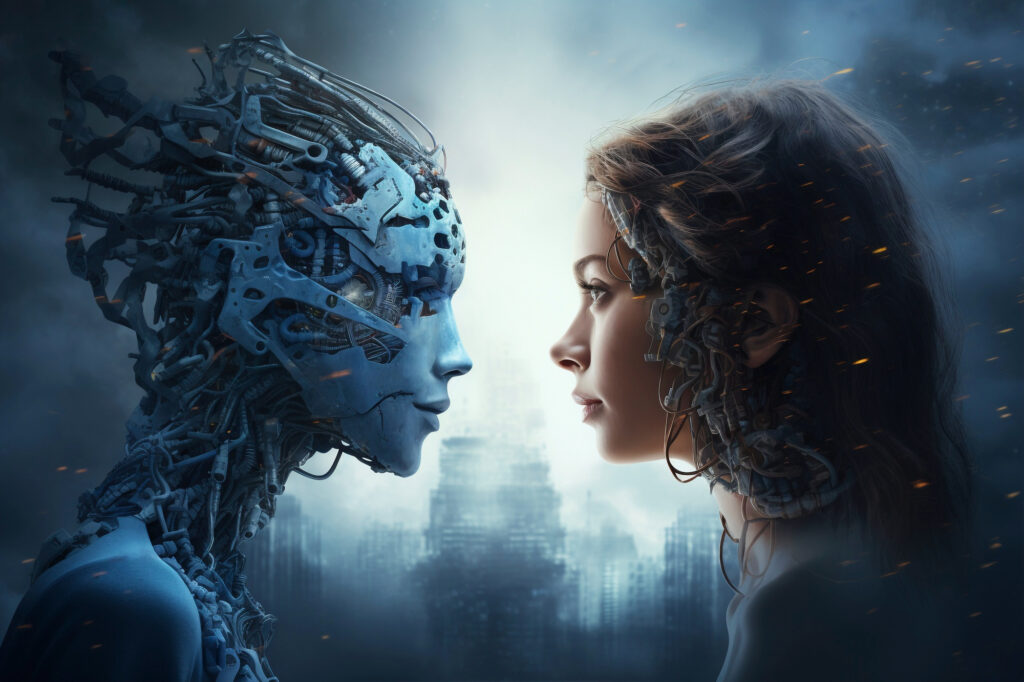
Artificial Intelligence (AI) is transforming the world at a rapid pace. From creating art to automating complex tasks, AI is everywhere. Two of the most talked-about types of AI today are Generative AI and Agentic AI. While they may sound similar, they are fundamentally different in how they work and what they can do.
This beginner-friendly guide explains what these AI systems are, how they differ, their applications, and why understanding them is essential for businesses, students, and tech enthusiasts. By the end of this article, you will have a clear picture of The Creator and The Executor—Generative AI and Agentic AI.
What is Generative AI?
Generative AI is a type of artificial intelligence designed to create new content. Think of it as a digital artist, writer, or composer that can produce outputs such as text, images, music, and even code.
Key Features of Generative AI
- Content Creation: It generates new content from data it has been trained on. For example, ChatGPT can write essays, stories, or code.
- Pattern Recognition: It learns patterns in existing data and uses them to produce original outputs.
- No Autonomy: Generative AI cannot make independent decisions or act on tasks without human prompts.
Examples of Generative AI
- Text generation: OpenAI’s ChatGPT, Jasper AI
- Image creation: DALL·E, MidJourney
- Music and audio: AIVA, Amper Music
- Code writing: GitHub Copilot
Generative AI is called “The Creator” because its main function is to generate new, creative content. It relies heavily on prompts and instructions from humans.
What is Agentic AI?
Agentic AI, on the other hand, is more than just a content generator. It is designed to act autonomously, make decisions, and carry out complex tasks without constant human intervention. Think of it as a digital assistant that can plan, execute, and adapt based on the environment.
Also Read: What Is Agentic AI and Why It’s a Game-Changer?
Key Features of Agentic AI
- Autonomous Decision-Making: It can assess situations and make decisions based on goals.
- Task Execution: It can complete multiple steps to achieve objectives.
- Learning and Adapting: Agentic AI can improve its performance over time based on feedback.
- Integration with Systems: It can connect to software, APIs, and devices to execute real-world tasks.
Examples of Agentic AI
- Robotic Process Automation (RPA) tools with AI decision-making
- Autonomous vehicles that drive and navigate without human input
- AI project managers that assign tasks and monitor progress
- AI personal assistants that can shop online, schedule appointments, and manage emails automatically
Agentic AI is called “The Executor” because it doesn’t just create content—it acts independently to achieve goals.
Generative AI vs Agentic AI: Key Differences
| Feature | Generative AI (Creator) | Agentic AI (Executor) |
| Primary Function | Create content | Execute tasks autonomously |
| Human Dependence | High (requires prompts) | Low (can act independently) |
| Examples | ChatGPT, DALL·E, GitHub Copilot | Autonomous drones, RPA, AI assistants |
| Decision-Making | None or minimal | Full, based on objectives |
| Applications | Writing, art, music, coding | Task automation, operations, robotics |
| Learning Style | Trained on data, static | Learns and adapts from feedback |
The main takeaway is that Generative AI creates, while Agentic AI executes. Understanding this difference is crucial for anyone interested in AI applications.
How Generative AI Works
Generative AI relies on advanced machine learning models called transformers, which analyze large datasets to understand patterns. For example:
- Training: The AI learns from vast amounts of text, images, or music.
- Pattern Recognition: It identifies structures, grammar, or visual features.
- Generation: It uses this knowledge to produce new, original content.
For instance, when you ask ChatGPT to write a story, it doesn’t copy from existing texts—it creates a new narrative based on patterns it has learned.
Learn more about how AI text generators work: OpenAI Guide
How Agentic AI Works
Agentic AI combines decision-making, planning, and execution. It often uses:
- Reinforcement learning: The AI learns by trial and error, improving performance based on rewards or penalties.
- Goal-setting algorithms: The AI prioritizes tasks to achieve objectives efficiently.
- Integration with APIs and devices: Enables real-world actions, from sending emails to controlling machines.
For example, an agentic AI in a warehouse can organize inventory, deploy robots to pick items, and manage shipping schedules without human intervention.
Applications of Generative AI
Generative AI is ideal for creative and intellectual tasks:
- Content Marketing: Write blog posts, social media content, or email campaigns.
- Visual Art and Design: Create marketing graphics, illustrations, or concept art.
- Music Composition: Produce original soundtracks for videos or games.
- Software Development: Auto-generate code snippets or assist in debugging.
Example tools: Jasper AI, DALL·E, GitHub Copilot
Applications of Agentic AI
Agentic AI is more suited for tasks requiring autonomy and decision-making:
- Automation of Operations: Automate repetitive business processes using AI-powered RPA.
- Autonomous Vehicles: Self-driving cars make decisions on navigation, safety, and route optimization.
- AI Personal Assistants: Manage schedules, emails, and online shopping automatically.
- Smart Manufacturing: Robots handle assembly lines with minimal human supervision.
Example tools: UiPath, autonomous drones, AI warehouse management systems.
Generative AI + Agentic AI: A Powerful Combination
While different, combining both AI types unlocks massive potential.
- Scenario 1: Marketing Campaigns
- Generative AI creates blog posts, ads, and visuals.
- Agentic AI schedules posts, monitors engagement, and adjusts campaigns automatically.
- Scenario 2: Customer Support
- Generative AI drafts responses or FAQs.
- Agentic AI assigns tickets, routes issues, and follows up with customers without human input.
- Scenario 3: Research and Analysis
- Generative AI summarizes reports and generates insights.
- Agentic AI applies the insights to optimize processes or make decisions in real time.
The synergy between creation and execution is reshaping industries globally.
Challenges and Limitations
Generative AI Limitations
- Can produce incorrect or biased content.
- Requires human prompts to be useful.
- Cannot take autonomous actions in the real world.
Agentic AI Limitations
- High complexity in design and programming.
- Can make mistakes if goals are poorly defined.
- Requires advanced safety measures to prevent unintended consequences.
Despite these challenges, both types of AI are advancing rapidly, offering unprecedented opportunities.
Future of AI: What to Expect
- Increased Automation: Agentic AI will handle more complex tasks with minimal human supervision.
- AI-Generated Creativity: Generative AI will continue enhancing creative processes in writing, design, and art.
- AI Collaboration: The most successful applications will combine creative generation and autonomous execution.
- Ethical Considerations: As AI becomes more powerful, regulating bias, transparency, and safety will be crucial.
Conclusion
Generative AI and Agentic AI represent two sides of the AI revolution. Generative AI, the Creator, excels in producing content, ideas, and designs. Agentic AI, the Executor, takes action, makes decisions, and completes tasks autonomously.
Understanding their differences, applications, and potential synergies is essential for anyone looking to leverage AI in business, technology, or everyday life. As AI evolves, the combination of creativity and execution will redefine productivity, efficiency, and innovation across industries.
FAQ: The Creator and The Executor — Agentic AI vs Generative AI
1. What is the main difference between Agentic AI and Generative AI?
The major difference is that Generative AI creates content, while Agentic AI takes action. Generative AI focuses on producing text, images, code, or audio based on patterns in data. It does not make decisions or act independently. Agentic AI, on the other hand, uses goals, memory, and decision-making abilities to perform tasks on your behalf. It can plan steps, choose the best action, and sometimes even interact with other systems automatically.
2. Can Agentic AI work without Generative AI?
Yes, it can—but not as effectively. Agentic AI needs reasoning and planning systems, which do not always require generative models. However, most modern Agentic AI systems combine both: the generative model handles complex language tasks, while the agentic layer handles actions, tools, and decisions. So while agent-based systems existed long before generative AI, today’s most powerful Agentic AI programs use generative models to improve creativity and intelligence.
3. Is Agentic AI independent or fully autonomous?
Not fully. Agentic AI is semi-autonomous, meaning it can take actions based on goals but still requires human permission, oversight, or predefined rules. It cannot make moral, legal, or personal decisions without guidance. It works within boundaries set by the user or developer. While it can automate workflows, send emails, search databases, or perform multi-step tasks, it does not replace total human control.
4. What are real-world examples of Agentic AI?
Examples include:
- AI personal assistants that schedule meetings or reply to emails.
- Autonomous cybersecurity agents that detect and patch vulnerabilities.
- AI automation workers that manage business tasks in apps like Zapier or Notion.
- Self-driving tech that analyzes surroundings and decides how to move.
- Customer service bots that solve problems without human support.
These agents make decisions, perform tasks, and respond to new information—something generative AI alone cannot do.
5. How does Generative AI support creativity?
Generative AI is built to create new content from learned patterns. It can write stories, generate marketing ideas, design art, develop websites, compose music, or produce realistic voiceovers. Because it understands patterns in huge datasets, it can create content that feels original and meaningful. It acts like a “creative partner” that helps humans brainstorm, draft, and design faster.
6. Which technology is better for businesses: Agentic or Generative AI?
It depends on the needs of the business.
- If the business needs content creation, copywriting, design, research, or chat support, then Generative AI is ideal.
- If the business wants automation, workflow management, customer service, cybersecurity monitoring, or task execution, then Agentic AI delivers more value.
The most efficient companies today use both, often combining them in a single system—creative generation plus automated execution.
7. Is Agentic AI safer or riskier than Generative AI?
Agentic AI carries higher risks because it can take actions that affect systems, finances, or people. If not supervised, it might perform unintended tasks or act on incorrect assumptions. Generative AI has risks too—such as misinformation or biased outputs—but it does not directly act on the world. For this reason, agentic systems require strong security rules, human oversight, and clear boundaries to prevent misuse or errors.
8. Can Agentic AI learn from mistakes?
Some advanced agent systems include memory and feedback loops, allowing them to adjust behavior based on results. This is still an emerging field. Traditional generative AI does not learn from individual conversations unless retrained. But Agentic AI can store context, recall user preferences, track progress, and analyze previous actions. This makes it feel more “intelligent” and better at improving over time.
9. Which jobs will benefit the most from Agentic AI?
Any job with repetitive or multi-step tasks will see major benefits—such as project managers, marketers, analysts, customer service agents, and software engineers. Agentic AI can automate small but time-consuming tasks like email replies, data collection, monitoring dashboards, or managing workflows. Instead of replacing jobs, it helps professionals focus on strategy and creativity rather than routine tasks.
10. Will Agentic AI replace Generative AI in the future?
No. They serve different roles and will continue working together. Generative AI is the creative engine, while Agentic AI is the action engine. The future of AI is a combination of both—systems that can create ideas and also execute them in the real world. This hybrid approach will make technology more powerful, more helpful, and more personalized for everyday users.